We start with the utility bill, not the panels.
Annual consumption in kWh is the first figure we need. The second is the load profile: a household where everyone is at work during the day consumes power in the morning and evening, so midday generation from the roof without a battery will be exported to the grid. A house with an air-to-air heat pump has high winter consumption when photovoltaic output is lowest. Each of these homes requires a different ratio of panels, batteries and control systems, even if they have identical roofs.
That is why our first step is not on the roof but reviewing your bill. From this we estimate the size of the power plant, and only then do we come to take measurements.
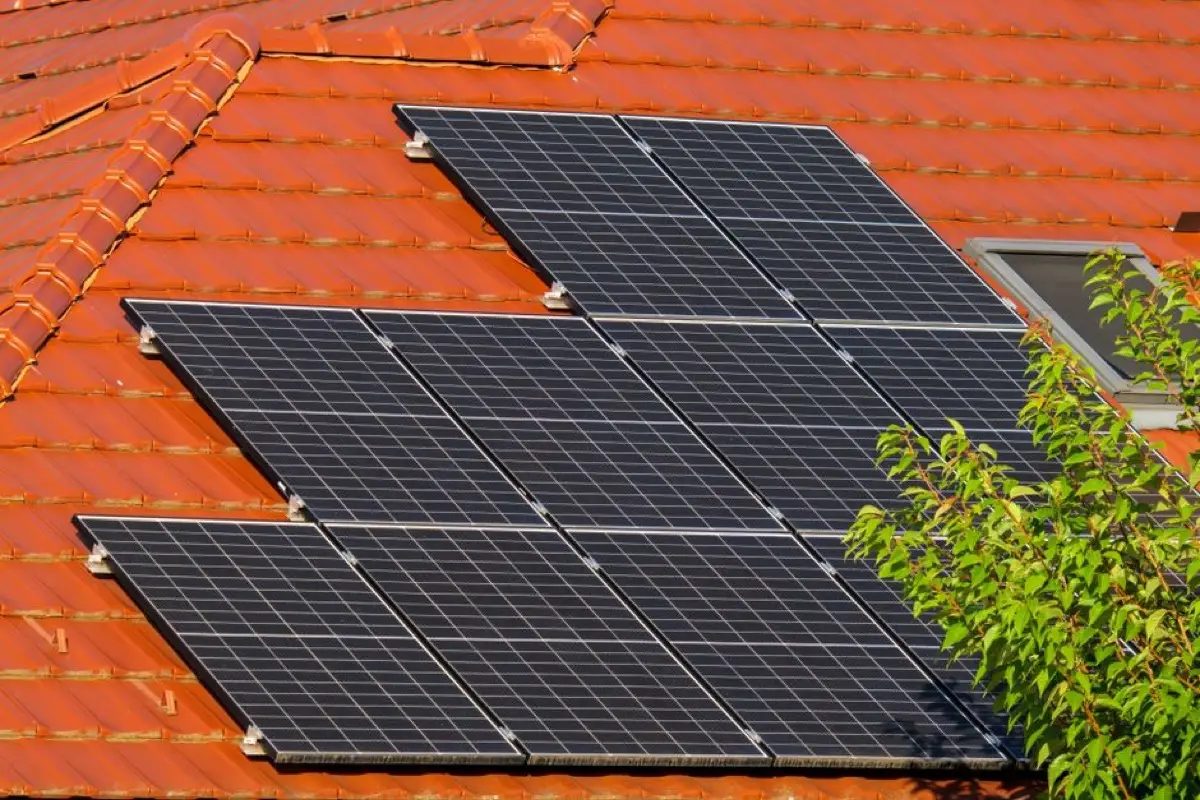
What a solar power plant for a detached house includes
- Photovoltaic panels based on roof area and orientation, arranged so that generation best matches your consumption. A south-facing roof provides the highest peak output, while an east-west combination delivers smoother production throughout the day. How we select panels
- Hybrid inverterwhich controls the panels, battery and grid feed. Three-phase for most homes, with islanding function if you want your home backed up against power outages.
- Battery storage system Sized for evening and night consumption. From June 2026, storage is a condition of support under the New Green Savings programme. What battery size
- Surplus management. First the boiler, then the battery, then the grid. Optionally preparation for a heat pump and charging an electric vehicle from the roof.
- Electrical installation: modification of the distribution board, circuit protection, surge protection, cable routing, inspection report.
- Administrationapplication for micro-source connection with the distributor, connection agreement, electricity meter replacement, documentation for the Social Security Administration.
Roof: what we assess during the inspection
Orientation and tilt, shading from chimneys, trees or neighbouring buildings, condition and type of roof covering, rafter load-bearing capacity for heavier structures, access for installation. For eternit and old metal roofs we recommend repairing the roof covering first; panels will last another thirty years on top of it and the covering beneath should do so too. Flat roofs are handled with a tilted structure using ballast without perforating the waterproofing.
Connection to the distribution network. A power plant up to 10.8 kW with no grid feed-in is handled in a simplified manner by the distributor; otherwise, it is a standard micro-source up to 100 kW requiring a connection application. The utility network statement usually arrives within a month, followed by a contract, an inspection after installation, and replacement of the electricity meter with a bidirectional one. The entire process
Subsidies and financing in 2026
For ordinary households, the direct grant for photovoltaics has been replaced by an interest-free loan under Nová zelená úsporám, with support tied to panel output and battery capacity. The direct grant remains available for low-income households in the NZÚ Light programme, where water heating is also a requirement. We will prepare all necessary documentation, including the renovation passport. Detailed conditions for NZÚ 2026
Frequently asked questions about a home solar plant
What is a typical output for a photovoltaic power plant on a detached house?
Most commonly 5 to 10 kWp. A household without electric heating will suffice with a smaller plant, while a home with a heat pump, air conditioning or an electric vehicle aims for the upper limit and beyond. We derive the output from the annual bill and how consumption is distributed throughout the day and year.
Does a photovoltaic power plant operate in winter and under cloudy skies?
Yes, but with significantly lower output. Winter months yield roughly one-tenth of summer production; panels also utilise diffuse light on cloudy days. Therefore, a system for a detached house is designed for the whole year, not for the summer peak, and summer surpluses are managed via sale or a virtual battery.
Can the power plant supply the house during a grid outage?
A standard hybrid system disconnects during an outage because it must not feed into a de-energised grid. If you require the house to remain operational during an outage, we will design a backup mode: an inverter with islanding capability, switching mechanisms, and separate backed-up circuits. Please state this at the outset, as it affects the selection of both the inverter and the battery.